Rental Requirements

Renting property in Spain is mostly straight forward. You need to prove that you are who you say you are, you’re good for the rent money, and you can put down a deposit. It’s the immigration bureaucracy that gunks up the long-term rental gears, so to speak. We’ve put together a list below of the hiddens steps that we've uncovered over the years to figure out if you’re move-in ready.
90 DAYS OR FEWER
Here, we’re talking about tourist accommodations like Airbnb, hotels, VRBO, and other short-term rentals. You aren’t likely to run into trouble with landlords but it’s good to know what to expect anyways.
- Proof of identity: If you’re renting an Airbnb or a hotel for a few months, all you need to provide is a scan of the photo page of your passport.
- Proof of income: You have to pay for the room, of course. A working debit or credit card will do.
- Deposit: Less of a deposit, more of a payment in full. Make sure you have up to three month’s rent in the bank to secure your reservation, plus any cleaning fees, tourist housing fees, property management fees… you know the fees.
MORE THAN 90 DAYS
If you don't hold a European passport, you can stay in Europe up to 90 days at a time on a tourist visa.1 This means that if you want to be in Spain for more than three months, you need to apply for a formal residency visa. Your visa is your ticket to medium- and long-term housing, but the road from hopping off the plane to signing a lease is a bumpy one if you don’t know what to expect.
- Proof of identity: A copy of your TIE (preferred) or the photo page of your passport and the visa sticker.
- Proof of income: A Spanish employment contract and pay stub (preferred) or bank statements that prove your monthly income is at least 3x greater than the rent.
- Deposit: At least one month’s rent as an upfront deposit (fianza) to your landlord, plus any other guarantees (garantías) or agency fees (honorarios) paid in multiples of one month’s rent.
HIDDEN STEPS
1. You need your TIE to sign a lease and a signed lease to get your TIE.
A TIE is the equivalent of a national ID card.2 Most official procedures require you to present your TIE as proof of identity. Landlords are more comfortable with a TIE than the visa sticker in your passport because it proves that you’ve successfully registered yourself as a Spanish resident. They may be resistant to signing a long-term contract before you have your TIE in hand.
Visual Aid
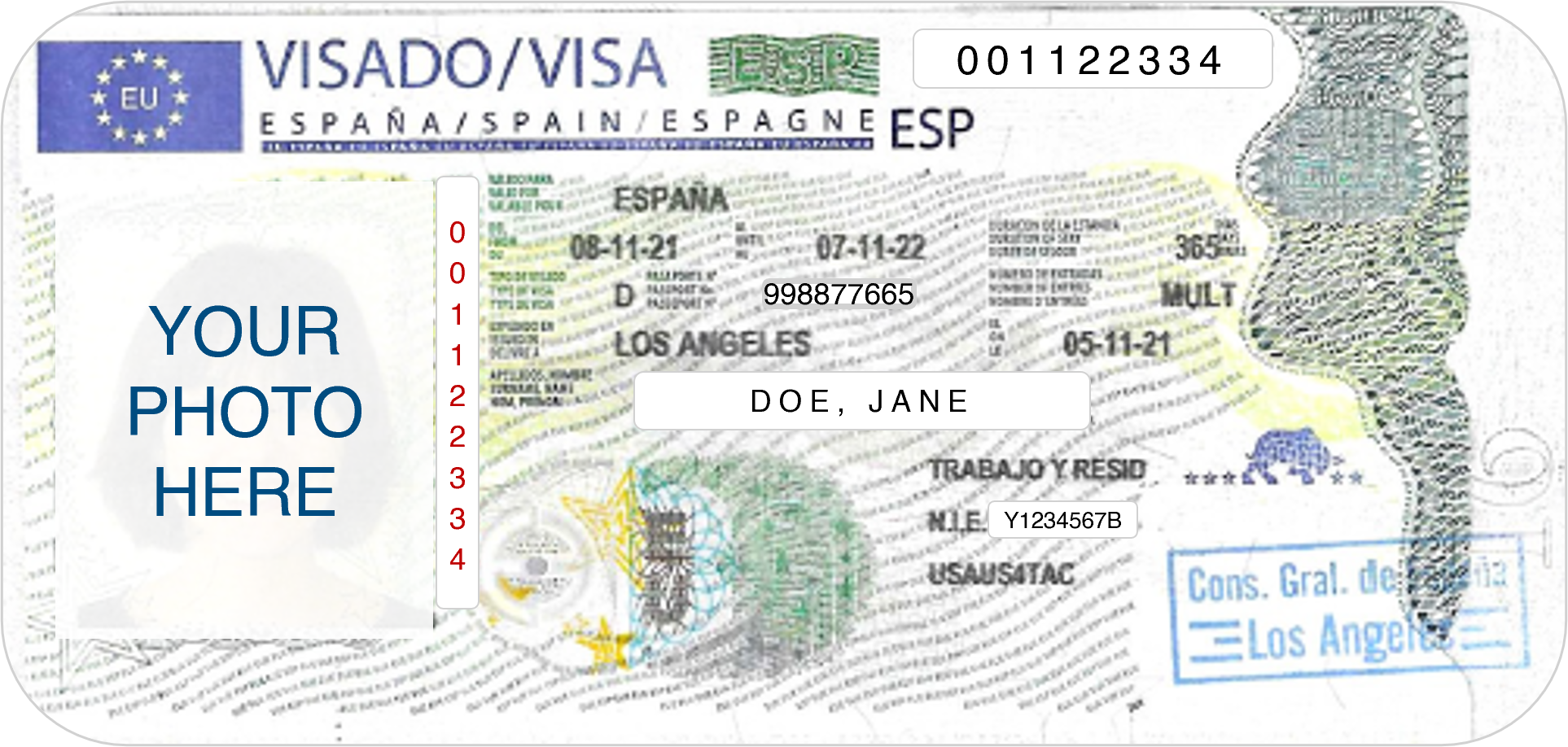
Passport visa sticker
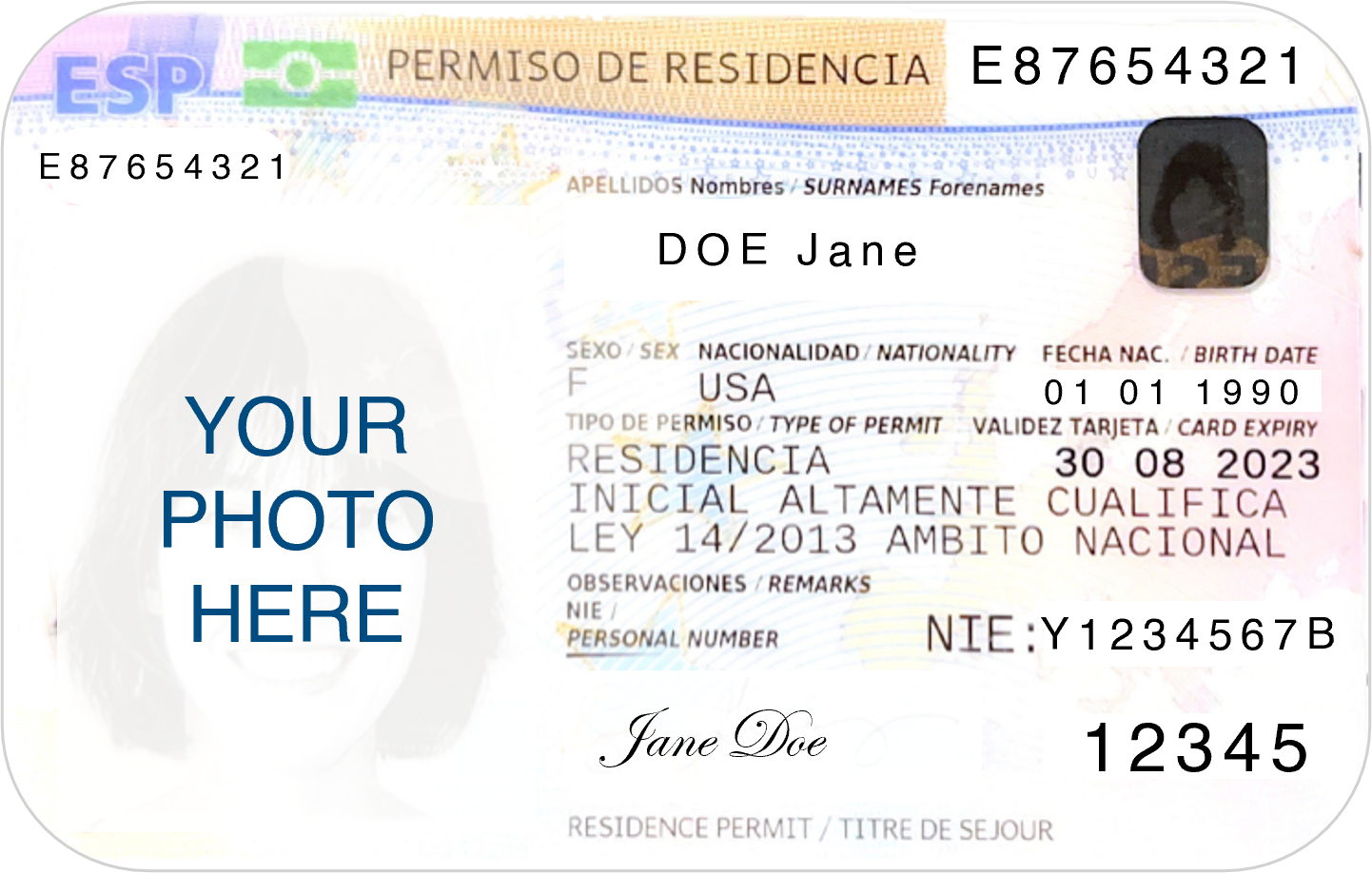
TIE
Here’s where things get tricky. Your landlord may not understand that to apply for your TIE, you have to present a signed long-term lease or a certificate of empadronamiento, called a padrón, to the Immigration Office. To recap, it’s virtually impossible for you to have a TIE before you rent your first apartment in Spain. To get your TIE, you need a lease. To get a lease, you’ll be asked for your TIE.
✔ Solution: Anticipate your landlord’s hesitation and insist that, as we mentioned above, having a TIE is not a requirement but a preference. Your passport and visa sticker are totally valid forms of identification. We were successful with this method because, although our landlord had never rented to non-Spaniards before, we spoke Spanish and were able to cite relevant legislation.
✔ Solution: If we could go back in time, we would have hired a Spanish-speaking team to represent us. Dealing with our landlord while juggling the TIE application was, by far, the most stressful part of our move. A competent agent or company can save you many hours and even more tears in the TIE application process and in signing a lease. Fees for administrative work, like reviewing a rental contract or managing your TIE application, are extremely reasonable and, in our opinion, well worth it.

TIP! Your rental contract needs to start on or before the day of your TIE appointment. For example, we met with our landlord on November 25 to sign a lease starting in December. Our TIE appointment was scheduled for November 30. Instead of the lease starting on December 1, we asked for it to start on November 30 and successfully presented it at our appointment with no issues.
2. Bank statements alone aren’t generally accepted as proof of income.
Even if you have bank statements showing that you have enough savings to cover the rent, your landlord will still probably ask for a Spanish employment contract and a pay stub, called a nómina.
Obviously, if you’re retired and you don’t work, you won’t have a pay stub. You have a pension, investment dividends, retirement savings, or any other passive income streams that made it possible for you to move to Spain in the first place. All of which would be reflected in a bank statement.
Some popular visas for retirees, like the Non-Lucrative Visa or NLV, are purely residency visas and prohibit the recipient from working. Instead, the Spanish government requires that people on the NLV demonstrate sufficient funds in their bank account to support themselves for an entire year without a job.
Most landlords are unfamiliar with this condition and still request three months’ worth of nóminas, despite the government itself requiring bank statements as proof of financial stability to live in the country in the first place.
✔ Solution: Have open, honest conversations about your visa restrictions if you’re not allowed to work. Itemize your income streams and include a mini report in Spanish and English alongside your bank statement. If applicable, present the proof of financial stability required for the NLV. Having these documents at the ready will build trust with your landlord and show that you’re a prepared, responsible tenant even if you’re not employed by a Spanish company.
✔ Solution: If your landlord is still concerned that you won’t make rent, you can get a bank to guarantee your monthly payments. You need to be an existing client of the bank and pay various fees throughout the life of the guarantee, but it’s much safer than paying 3-6 months’ rent in advance directly to the landlord. If the owner insists on cash in hand instead of a bank guarantee, that’s a major red flag. It tips the power balance too far in the landlord’s favor and puts the tenant at risk of losing significantly more money than just the deposit if something goes wrong.
3. You’re expected to have a Spanish bank account before you sign the lease.
The deposit, first month’s rent, and agency fees3 are due as soon as you sign the contract, even if it’s weeks before your lease actually starts. As such, you’ll need a bank account that can make instant transfers in euros. If you're from the United States, this step is especially important, because traditional American banks still don’t offer either of these services.
Your only recourse here is to open a Spanish bank account. Most banks require a TIE to open an account with them. As we discussed in an earlier Hidden Step, it’s virtually impossible for you to get your TIE before you sign a lease, and to sign a lease, you need a Spanish bank account. Luckily, a select few Spanish banks accept just a passport to open an account. We’ll go into a full debrief of banking in Spain in a future Blueprint.
Once you’ve signed the contract and transferred all relevant payments, the landlord will need your Spanish bank account number to put the utility bills in your name. Utility bills are debited directly from your account and can’t be paid by credit card.
✔ Solution: Open a Spanish bank account at a local branch or a digital bank that offers a Spanish bank account number, like N26 and Revolut. As we mentioned above, some banks let you open an account with just your passport while others require a TIE. We recommend funding the account with four times your maximum monthly rental budget before you sign the lease. You’ll cover the minimum requirement of one month’s deposit and the first month’s rent, plus two additional months of buffer.
Let’s say you find an apartment you love and the landlord is requesting the mandatory one months’ deposit down plus an additional two months of guarantee. If you negotiate to knock off the additional guarantee, great! If the landlord won’t budge, you need to have that money sitting in your account ready to transfer if you still want the apartment.
LIVED EXPERIENCE
We didn’t have a Spanish bank account when we signed our lease and were left playing the fool – not because we didn’t have the deposit money, but because it was all stuck in dollars in an American bank. We didn’t have time to open a traditional bank account, so we exchanged our dollars for euros using Wise and transferred the money to our landlord. This is doable, but not the best solution, since you’ll pay conversion fees and you can’t pay utilities with a Wise account. Once we got a Spanish bank account, we used that account to pay rent and our bills, but we wish we’d been prepared in the moment.
Next: Lease Types and Tenant Rights →
1. 90 days over a 180-day period, according to the Schengen Borders Agreement. Back to text
2. TIE stands for Tarjeta de Identidad de Extranjero, which translates to “Foreign Identity Card.” On it, you’ll find your NIE, or Número de Identidad de Extranjero, which means “Foreign Identity Number.” All Spanish residents have a unique NIE that never expires, though you’ll have to periodically renew the physical TIE card.Back to text
3. The standard agency fee is one month’s rent plus a service tax of 21%, called VAT. Back to text